
Abyssinian Thrush

Here’s a detailed profile of the Abyssinian Thrush — great for blog use, bird-watching notes or a nature column.
Basic Profile & Taxonomy
-
Scientific name: Turdus abyssinicus. (Wikipedia)
-
Common names: Abyssinian Thrush, African Mountain Thrush, Northern Olive Thrush, Ethiopian Thrush. (wildlife of kenya by Nicolas Urlacher)
-
Family: Turdidae (the “true thrushes”). (Wikipedia)
-
Conservation status: Listed as Least Concern by IUCN. (Wikipedia)
Description & Identification
-
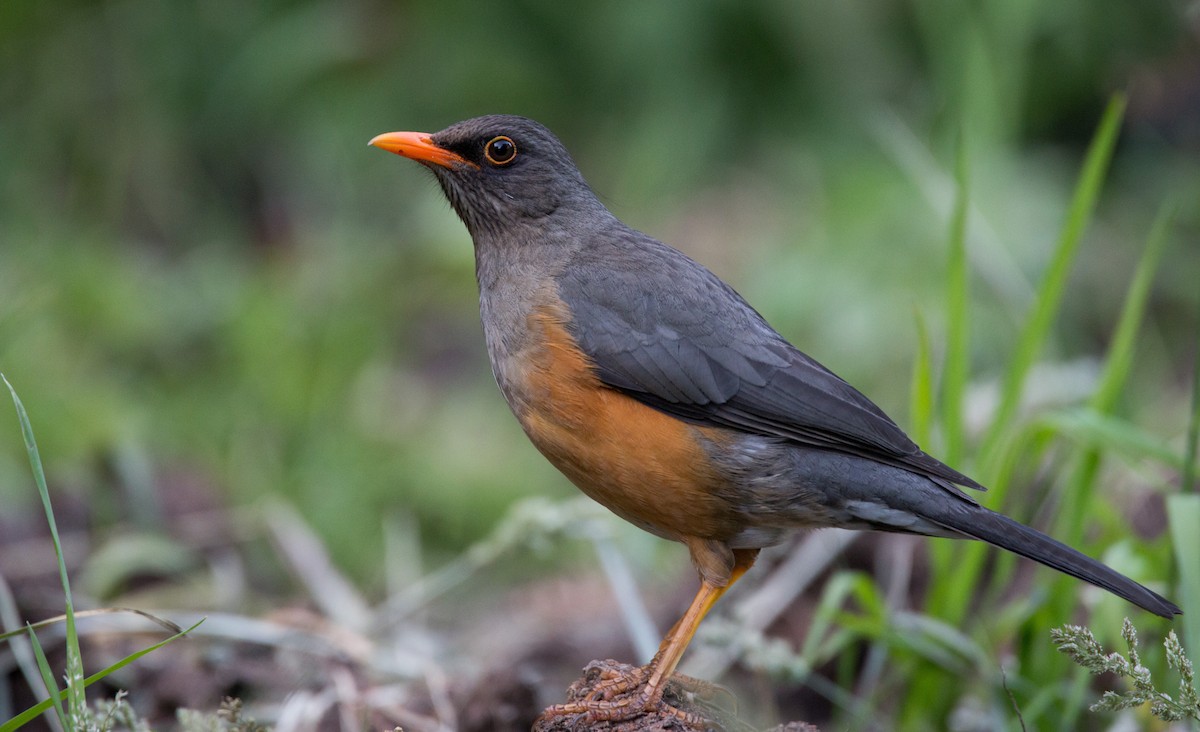
Size ~~ ~22 cm in length. (wildlife of kenya by Nicolas Urlacher)
-
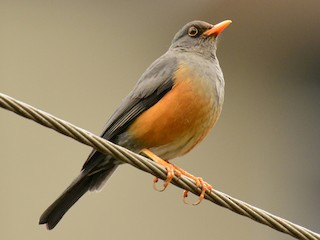
Bill is orange (not yellow) — helps distinguish from some similar species. (Wikipedia)
-
Generally darker than the similar African thrush and lacks malar stripes. (Wikipedia)
-
Plumage can vary somewhat by altitude and subspecies: at higher altitudes individuals tend to be darker. (wildlife of kenya by Nicolas Urlacher)
Distribution & Habitat
-
Geographic range: Found in the highlands and montane forests of eastern Africa – from Eritrea and Ethiopia, southwards through parts of Kenya, Tanzania, and extending into north-eastern Zambia & Malawi. (Wikipedia)
-
Habitat: Montane forests, woodlands, exotic plantations, gardens and parks in highland areas. (wildlife of kenya by Nicolas Urlacher)
Behaviour & Ecology
-
Diet: Likely includes insects, molluscs, spiders and probably fruit—as typical for many thrushes — though detailed studies are somewhat limited. (wildlife of kenya by Nicolas Urlacher)
-
Nesting: Cup‐shaped nests are built, often elevated in trees or bushes, though specific nest details for all subspecies may still be scarce.
-
Movement: Generally resident in its montane habitat, though local movements may occur depending on food availability or seasonal variation. (avibase.bsc-eoc.org)
Subspecies & Taxonomic Notes
-
This species was formerly classified as a subspecies of the Olive Thrush (Turdus olivaceus), but genetic studies have supported its status as a separate species. (Wikipedia)
-
Multiple subspecies are recognised, including T. a. abyssinicus, T. a. deckeni, T. a. baraka, T. a. bambusicola, T. a. nyikae, T. a. oldeani. (Wikipedia)
Importance & Conservation
-
While listed as Least Concern, its dependence on montane forest habitat means that habitat degradation (deforestation, land use change) could impact local populations.
-
It serves as a good indicator species for the health of highland forest ecosystems in eastern Africa.
-
Birdwatchers and ecotourists targeting highland forest zones (Ethiopia, Kenya highlands, Tanzania mountains) often prize sightings of this bird.
Fun Facts
-
Because its bill is orange (rather than yellow), the Abyssinian Thrush looks distinct compared to many “olive thrush” types.
-
In Kenya and Tanzania, this species may go by names like “Mountain Thrush” in birding guides.
-
Some subspecies show slight variation in colouration, especially in more remote mountain habitats.
If you like, I can pull audio of its song/call, distribution map, and photographic shots of nesting & juvenile plumage — would you like that for your blog?

"This Content Sponsored by SBO Digital Marketing.
Mobile-Based Part-Time Job Opportunity by SBO!
Earn money online by doing simple content publishing and sharing tasks. Here's how:
- Job Type: Mobile-based part-time work
- Work Involves:
- Content publishing
- Content sharing on social media
- Time Required: As little as 1 hour a day
- Earnings: ₹300 or more daily
- Requirements:
- Active Facebook and Instagram account
- Basic knowledge of using mobile and social media
For more details:
WhatsApp your Name and Qualification to 9943990669
a.Online Part Time Jobs from Home
b.Work from Home Jobs Without Investment
c.Freelance Jobs Online for Students
d.Mobile Based Online Jobs
e.Daily Payment Online Jobs
Keyword & Tag: #OnlinePartTimeJob #WorkFromHome #EarnMoneyOnline #PartTimeJob #jobs #jobalerts #withoutinvestmentjob"


No comments:
Post a Comment