
Abyssinian Slaty Flycatcher (Melaenornis chocolatinus)
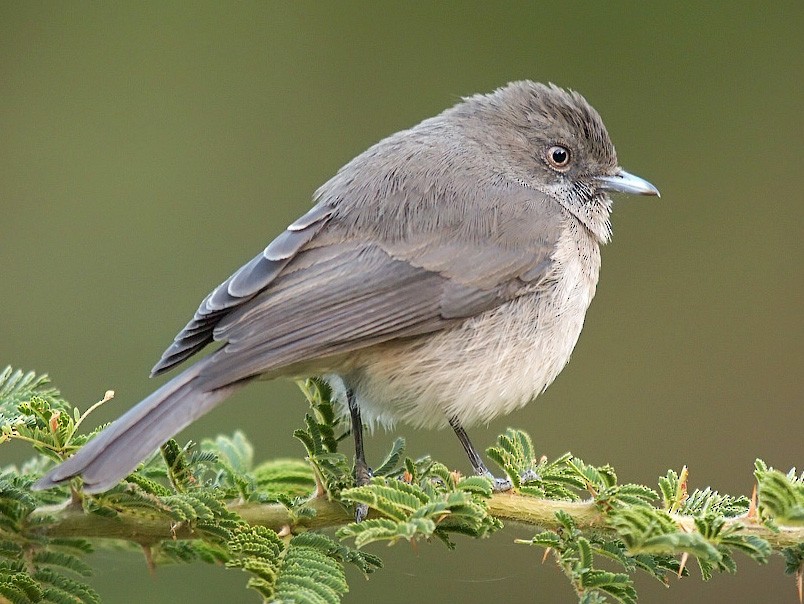
Here’s a detailed overview of the Abyssinian Slaty Flycatcher — its identity, habitat, behaviour and why it matters.
🐦 Basic Profile
-
Common names: Abyssinian Slaty Flycatcher, Abyssinian Flycatcher, Abyssinian Black Flycatcher, Abyssinian Chocolate Flycatcher. (avibase.bsc-eoc.org)
-
Scientific name: Melaenornis chocolatinus. (avibase.bsc-eoc.org)
-
Family: Muscicapidae (Old World flycatchers) — the “chats and flycatchers”. (The Guardian)
-
IUCN Red List Status: Least Concern (due to its relatively wide range and stable population). (BirdLife DataZone)
🌍 Distribution & Habitat
-
Geographic range: Primarily in Ethiopia and Eritrea (Highlands and plateaus) in Africa. (Wikipedia)
-
Habitat: Mid to high altitude forests, woodland edges, clearings, sometimes suburban gardens/parks in upland areas. (Wikipedia)
-
Elevation & terrain: As a highland species, it is adapted to cooler upland environments (rather than lowland tropics).
🔍 Physical Description & Behaviour
-
Size & appearance: Around 15-16 cm in length; weight approx. 20-25 g. (Wikipedia)
-
Plumage: Upperparts are dark sooty/brownish (slate-like), underparts buff brown; yellow eye stands out. (Wikipedia)
-
Behaviour:
-
Perches vertically like typical flycatchers. (Wikipedia)
-
Foraging: Salls out from perch to catch insects in flight (typical flycatcher method). (The Guardian)
-
-
Vocalisations: Makes “tseep” calls and harsh alarm calls (“chiiering” type) when disturbed. (Wikipedia)
📅 Reproduction & Ecology
-
Breeding: Suspected breeding periods include January-February and March-June in Ethiopia (based on gonad observations). (Wikipedia)
-
Nesting: Cup-shaped nest placed in a narrow fork on a horizontal branch; clutch size around 3 blue-grey blotched eggs. (Wikipedia)
-
Role in ecosystem: As an insectivore, helps control insect populations; also part of the highland forest/woodland bird community.
✅ Conservation & Significance
-
Status: Least Concern, thanks to a fairly large range and absence of major rapid declines. (BirdLife DataZone)
-
Threats: While currently stable, potential threats include habitat degradation (deforestation, changes in land-use) especially in highland zones.
-
Significance:
-
Represents the unique avifauna of the Ethiopian/Eritrean highlands — regions with many endemic or near-endemic species.
-
Relatively inconspicuous but interesting from a behavioural/biogeographic standpoint (adapted to highland flycatcher niche).
-
📝 Interesting Facts
-
The genus placement: It has sometimes been placed in the genus Dioptrornis. (Wikipedia)
-
The common name “slaty” refers to its slate-grey/brownish upperparts, while “Abyssinian” is an old name for the upland region of Ethiopia/Eritrea (historically Abyssinia).
-
Even though it might appear “drab” compared to colourful tropical birds, its subtle colouring suits its upland woodland environment.
If you like, I can pull together detailed maps of its distribution, recorded migratory or movement patterns, and key sites for observing this species in Ethiopia/Eritrea. Would you like me to do that?

"This Content Sponsored by SBO Digital Marketing.
Mobile-Based Part-Time Job Opportunity by SBO!
Earn money online by doing simple content publishing and sharing tasks. Here's how:
- Job Type: Mobile-based part-time work
- Work Involves:
- Content publishing
- Content sharing on social media
- Time Required: As little as 1 hour a day
- Earnings: ₹300 or more daily
- Requirements:
- Active Facebook and Instagram account
- Basic knowledge of using mobile and social media
For more details:
WhatsApp your Name and Qualification to 9943990669
a.Online Part Time Jobs from Home
b.Work from Home Jobs Without Investment
c.Freelance Jobs Online for Students
d.Mobile Based Online Jobs
e.Daily Payment Online Jobs
Keyword & Tag: #OnlinePartTimeJob #WorkFromHome #EarnMoneyOnline #PartTimeJob #jobs #jobalerts #withoutinvestmentjob"


No comments:
Post a Comment