Saturday, 28 December 2024

Taiwan Blue Magpie (Urocissa caerulea) The Taiwan Blue Magpie (Urocissa caerulea) is a stunning and distinctive bird species native to Taiwan, known for its vibrant colors and striking appearance. It is a member of the crow family (Corvidae) and is famous for its long tail feathers and iridescent plumage. This species is also known for its intelligence, social behavior, and playful nature.


Here are the complete details of the Taiwan Blue Magpie:

Scientific Classification

  • Kingdom: Animalia
  • Phylum: Chordata
  • Class: Aves
  • Order: Passeriformes
  • Family: Corvidae
  • Genus: Urocissa
  • Species: Urocissa caerulea

Physical Description

  • Size:

    • Length: Approximately 64-70 cm (25-28 inches), making it a large bird, especially with its long tail.
    • Weight: Around 200-300 grams.
  • Plumage:

    • The Taiwan Blue Magpie is known for its bright blue feathers, particularly around its wings, back, and tail. The blue color is iridescent and changes depending on the angle of the light.
    • Its long tail is one of its most distinct features, often with alternating shades of blue and black.
    • The head is black with a white patch around the eyes, and it has a red beak and legs.
    • Underparts: The underbelly is white, and the bird has a white tip on its tail.
    • Eyes: It has striking yellow eyes that contrast with its dark head and blue body.

Habitat

  • Native Range: The Taiwan Blue Magpie is endemic to Taiwan, meaning it is found nowhere else in the world.
  • Preferred Habitat: It inhabits forests, mountain slopes, and wooded areas at altitudes ranging from 1,000 to 2,400 meters (3,280 to 7,874 feet). It is commonly found in subtropical and tropical forests with dense vegetation.
  • Adaptability: The species has adapted well to the presence of human settlements, often seen near villages, agricultural fields, and urban areas in Taiwan.

Diet and Feeding Behavior

  • Omnivorous Diet: The Taiwan Blue Magpie is an omnivorous bird, feeding on a variety of food sources including fruits, seeds, insects, small vertebrates, and even eggs of other birds.
  • Foraging Behavior: These birds are known for their clever foraging techniques. They may work together in groups to find food, and are observed stealing food from other birds or animals. Their sharp beaks and claws allow them to manipulate food and objects effectively.
  • Social Feeding: They are also known to forage in groups, particularly during the breeding season when family groups come together.

Behavior and Social Structure

  • Social Nature: Taiwan Blue Magpies are highly social birds and are often seen in family groups or small flocks. They are known for their cooperative behavior, especially during feeding and raising their young.
  • Communication: The bird uses a variety of calls and squawks to communicate with others in its group. They also have a complex set of vocalizations, including whistles and chattering sounds.
  • Intelligence: Like other members of the crow family, Taiwan Blue Magpies are highly intelligent and known to engage in problem-solving activities. They can use tools, recognize themselves in mirrors, and even understand simple cause-and-effect relationships.

Breeding and Reproduction

  • Breeding Season: The breeding season typically occurs between March and May. During this period, pairs of magpies form and build nests in tree branches or bushes.
  • Nest Building: The nests are constructed using twigs, leaves, and roots. Both the male and female participate in nest-building, with the female usually taking the lead.
  • Clutch Size: A typical clutch consists of 3 to 5 eggs. The eggs are pale blue or greenish-blue with small spots or markings.
  • Incubation and Hatching: The female incubates the eggs for about 17-18 days, with the male occasionally helping with feeding and guarding the nest.
  • Parental Care: After hatching, the parents are highly attentive, with both males and females feeding the chicks. The young magpies are fed a diet of insects, seeds, and other small food sources.
  • Fledging: The chicks fledge (leave the nest) at about 3-4 weeks but may stay with the parents for several weeks after fledging, learning foraging techniques and social behaviors.

Conservation Status

  • IUCN Red List: The Taiwan Blue Magpie is currently listed as Near Threatened by the International Union for Conservation of Nature (IUCN).
  • Threats:
    • Habitat loss due to deforestation and urbanization is a significant threat to the species.
    • Human activity, including agricultural development and the destruction of forests, has led to a reduction in suitable habitats.
    • Predation by introduced species, such as domestic cats, and illegal trapping also pose risks to the population.
  • Conservation Efforts:
    • Various conservation programs are in place in Taiwan to protect the species, including habitat preservation, public awareness campaigns, and legislation to protect the magpies and their habitats.
    • There are also efforts to educate the public about the importance of this bird to Taiwan’s ecosystem and to discourage illegal activities like trapping.

Cultural Significance

  • The Taiwan Blue Magpie is an important cultural symbol in Taiwan. It is featured on the country's national parks, postage stamps, and even in folk art.
  • It is considered a symbol of good luck and happiness in Taiwanese culture, representing the idea of harmony and social cooperation due to its cooperative behavior in nature.

Tourism and Ecotourism

  • Ecotourism: The Taiwan Blue Magpie has become a key attraction for bird watchers and ecotourists visiting Taiwan. Various nature reserves and conservation areas offer guided tours where people can observe the magpies in their natural habitat.
  • Bird Watching: Taiwan’s mountainous regions, such as the Taroko Gorge and Alishan, are prime locations for spotting these birds. Birdwatching tours often highlight the Taiwan Blue Magpie due to its distinctive look and behavior.

Fun Facts

  • The Taiwan Blue Magpie has a nickname in Taiwan, often referred to as the "Beautiful Magpie" because of its stunning coloration and striking tail.
  • These birds are also known to be playful and may engage in a variety of interactive behaviors, such as playing with objects and even other animals.
  • The Taiwan Blue Magpie’s long tail feathers are not only used for balance but also for communication within the group, especially during social interactions or while displaying dominance.

Conclusion

The Taiwan Blue Magpie is a fascinating and charismatic bird with unique characteristics, both physically and behaviorally. Its beautiful plumage, social nature, and intelligence make it a standout species in Taiwan's wildlife. While facing threats from habitat loss and human activities, efforts are underway to protect this iconic bird and its habitat. For nature lovers and birdwatchers, the Taiwan Blue Magpie remains a symbol of Taiwan's rich biodiversity and natural beauty.


"This Content Sponsored by Buymote Shopping app

BuyMote E-Shopping Application is One of the Online Shopping App

Now Available on Play Store & App Store (Buymote E-Shopping)

Click Below Link and Install Application: https://buymote.shop/links/0f5993744a9213079a6b53e8

Sponsor Content: #buymote #buymoteeshopping #buymoteonline #buymoteshopping #buymoteapplication"

Friday, 20 December 2024

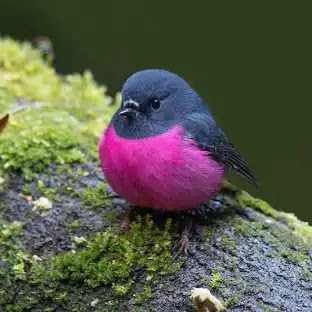
The pink robin (Petroica rodinogaster) is a small passerine bird native to southeastern Australia. Its natural habitats are cool temperate forests of far southeastern Australia.[2] Like many brightly coloured robins of the family Petroicidae, it is sexually dimorphic. Measuring 13.5 cm (5.3 in) in length, the robin has a small, thin, black bill, and dark brown eyes and legs.[3] The male has a distinctive white forehead spot and pink breast, with grey-black upperparts, wings and tail. The belly is white. The female has grey-brown plumage.[4] The position of the pink robin and its Australian relatives on the passerine family tree is unclear; the Petroicidae are not closely related to either the European or American robins, but appear to be an early offshoot of the Passerida group of songbirds.


Taxonomy

Described by Belgian naturalist Auguste Drapiez in 1819, the pink robin is a member of the Australasian robin family Petroicidae.[5][6] Sibley and Ahlquist's DNA-DNA hybridisation studies placed this group in a Corvida parvorder comprising many tropical and Australian passerines, including pardalotes, fairy-wrens, honeyeaters, and crows.[7] However, subsequent molecular research (and current consensus) places the robins as a very early offshoot of the Passerida (or "advanced" songbirds) within the songbird lineage.[8] Testing of the nuclear and mitochondrial DNA of Australian members of the genus Petroica suggests that the pink and rose robins are each other's closest relative within the genus.[9]


The generic name Petroica derives from the Ancient Greek petros 'stone' and oikos 'house'. The specific name rodinogaster derives from the Ancient Greek rhodinos 'pink' and gaster 'belly'.[10]

Male pink robin calling

Duration: 11 seconds.0:11

Description

The pink robin is 13.5 cm (5.5 in) long and displays sexual dimorphism – the males and females have plumage which differ markedly. The male has a dark blackish-grey head, throat, back, wings and tail, a pink breast and belly fading to white on the lower abdomen, and a white forehead. The female is dark grey-brown above, with two buff-coloured wing-bars and pinkish-tinged underparts. The bill and feet are black, and the eyes are dark brown.[11]


"This Content Sponsored by Buymote Shopping app

BuyMote E-Shopping Application is One of the Online Shopping App

Now Available on Play Store & App Store (Buymote E-Shopping)

Click Below Link and Install Application: https://buymote.shop/links/0f5993744a9213079a6b53e8

Sponsor Content: #buymote #buymoteeshopping #buymoteonline #buymoteshopping #buymoteapplication"
Thursday, 12 December 2024

Mandarin ducks (scientifically known as Aix galericulata) are stunning, colorful waterfowl native to East Asia. Known for their striking appearance and cultural symbolism, these ducks are often regarded as a symbol of love, fidelity, and beauty. Below is a complete overview of Mandarin ducks, covering their physical traits, habitat, behavior, and cultural significance:


1. Physical Description

  • Male Mandarin Duck (Drake):
    • The male Mandarin duck is one of the most colorful and visually striking ducks. It has a mix of vibrant orange, blue, green, and purple plumage.
    • The male features a distinctive fan-shaped crest on its head, which is bright orange and extends to the back.
    • Its body is covered in iridescent feathers with bright blue and green hues on the wings, and a white crescent-shaped marking around the eyes.
    • The breast and flanks are a rich chestnut-brown with vertical black stripes, creating a beautiful contrast with the bright colors.
    • The bill is red, and the legs are orange.
  • Female Mandarin Duck (Hen):
    • Female Mandarin ducks are more subdued in color compared to males, with soft brown and gray plumage, making them less conspicuous, especially during the breeding season.
    • The female has a white throat and eye ring around the eyes, which stand out against the darker plumage.
    • Unlike the male, the female does not have the distinctive crest and has a more compact, streamlined body.

2. Size and Weight

  • Length: Mandarin ducks are medium-sized ducks. They typically measure between 41 to 49 cm (16 to 19 inches) in length.
  • Wingspan: They have a wingspan of about 65 to 75 cm (25 to 30 inches).
  • Weight: Males generally weigh around 0.5 to 0.7 kg (1.1 to 1.5 pounds), while females are slightly lighter, weighing around 0.4 to 0.6 kg (0.9 to 1.3 pounds).

3. Habitat and Range

  • Native Range: Mandarin ducks are native to East Asia, specifically China, Japan, Korea, and Russia. They are typically found near wooded lakes, rivers, and wetlands in these regions.
  • Introduced Populations: In recent years, Mandarin ducks have been introduced to parts of Europe and North America. They have established populations in the UK, the Netherlands, and the United States.
  • Preferred Habitat: They thrive in areas with calm waters, such as ponds, streams, and lakes with surrounding woodlands or forests. They are also found in urban parks with suitable water bodies.

4. Behavior and Diet

  • Feeding Habits: Mandarin ducks are omnivorous and feed on a variety of food sources, including aquatic plants, seeds, insects, small fish, and mollusks. They dive into water to forage for food, especially during the winter months when other food sources may be scarce.
  • Social Behavior: While mandarin ducks are generally solitary or found in small groups, during the breeding season, they form monogamous pairs. These pairs are often seen in the wild with the male exhibiting a variety of courtship behaviors to attract the female.
  • Flight: Mandarin ducks are strong fliers but prefer to stay close to water bodies. They are also known for their distinctive flight patterns, which include fast, direct flights with rapid wing beats.

5. Breeding and Nesting

  • Breeding Season: The breeding season for Mandarin ducks usually begins in spring, around March to May.
  • Nesting Sites: Mandarin ducks prefer to build their nests in tree cavities or in hollow logs near water. They often select tall trees for their nesting sites, sometimes up to 10 meters (33 feet) above the ground.
  • Nesting Behavior: The female typically lays 8 to 12 eggs, which are creamy-white in color. She incubates the eggs for about 28 to 30 days. During this time, the male stands guard and keeps an eye out for predators.
  • Ducklings: Once the eggs hatch, the ducklings are able to swim and walk almost immediately. The mother leads them to the water, where they begin foraging for food.

6. Mating and Fidelity

  • Monogamous Pairs: Mandarin ducks are famously monogamous, forming strong pair bonds that last for the duration of the breeding season, and sometimes even for life.
  • Courtship Rituals: The male Mandarin duck performs elaborate courtship displays, including head bobbing, fluffing his crest, and presenting his bright plumage. These displays are intended to attract the female and demonstrate his fitness as a mate.
  • Symbol of Love: Due to their monogamous nature, Mandarin ducks are often regarded as a symbol of fidelity, love, and romance in many cultures, especially in East Asia.

7. Cultural Significance

  • Symbol of Love and Fidelity: In Chinese and Japanese cultures, the Mandarin duck is widely recognized as a symbol of romantic love, loyalty, and fidelity. The belief that these ducks mate for life has made them a popular motif in art, poetry, and literature.
  • In Chinese Art: Mandarin ducks are often depicted in traditional Chinese paintings and are associated with good fortune and harmony in relationships. They are often seen as an auspicious symbol for newlyweds or couples wishing to maintain a strong, loving bond.
  • In Japanese Culture: In Japan, Mandarin ducks are also symbolic of lasting love and are sometimes used in decorative objects like kimonos, ceramics, and paintings.

8. Conservation Status

  • IUCN Status: The Mandarin duck is currently listed as Least Concern by the International Union for Conservation of Nature (IUCN), meaning the species is not facing any immediate threats of extinction.
  • Population Trends: While the Mandarin duck is relatively common in the wild, habitat destruction and pollution in some areas can pose threats to their populations. However, they are adaptable and have successfully established new populations in various parts of the world.
  • Conservation Efforts: Conservation efforts primarily focus on habitat preservation and maintaining clean, accessible water bodies where Mandarin ducks can thrive.

9. Mandarin Ducks in Captivity

  • Mandarin ducks are often kept in zoos and wildlife reserves around the world. They are also popular in private collections and ponds due to their beautiful plumage and captivating behavior.
  • While they can live in captivity, it's important that they are provided with an environment that mimics their natural habitat, including access to water and suitable nesting sites.

Conclusion

Mandarin ducks are among the most striking and fascinating bird species, known for their stunning beauty, symbolism of fidelity, and association with love and romance in Eastern cultures. Native to East Asia but now found in various parts of the world, these ducks are admired not only for their vibrant plumage but also for their behaviors, which highlight loyalty and affection between mated pairs. With their adaptability and resilience, Mandarin ducks continue to thrive in various habitats, making them an iconic symbol in both nature and cultural traditions.


"This Content Sponsored by Buymote Shopping app

BuyMote E-Shopping Application is One of the Online Shopping App

Now Available on Play Store & App Store (Buymote E-Shopping)

Click Below Link and Install Application: https://buymote.shop/links/0f5993744a9213079a6b53e8

Sponsor Content: #buymote #buymoteeshopping #buymoteonline #buymoteshopping #buymoteapplication"

Saturday, 7 December 2024

The Cuban Tody (Todus multicolor) is a small, colorful bird species found in the West Indies, particularly in Cuba, Hispaniola (Haiti and the Dominican Republic), and the surrounding islands. It belongs to the Tody family (Todus), which is a small group of birds known for their vivid plumage and unique behavior. The Cuban Tody is the national bird of Cuba and is widely admired for its striking appearance and distinct call.


Physical Description:

  • Size: The Cuban Tody is a small bird, measuring about 9–11 cm (3.5–4.3 inches) in length.
  • Coloration: It has a very distinctive and bright coloration. The bird features:
    • A green body.
    • A red throat and belly (in males).
    • White markings around the eyes and on the throat.
    • Blue and greenish-blue hues on the wings and tail.
    • Its tail is short and slightly rounded.
  • Beak: The Cuban Tody has a short, stout, and slightly upturned beak, which it uses to catch insects.
  • Sexual Dimorphism: There is some degree of sexual dimorphism. The male has more intense red coloring on its belly and throat, while the female has more muted hues.

Habitat:

  • Range: The Cuban Tody is found primarily in Cuba, but it can also be spotted in nearby islands like Jamaica, Hispaniola, and Grand Cayman.
  • Habitat: It prefers tropical forests and woodland areas, often residing in forested valleys and mountainous regions. It is commonly found at lower elevations but may also inhabit the higher altitudes of Cuba's mountain ranges.

Behavior and Diet:

  • Diet: The Cuban Tody is an insectivore, primarily feeding on small insects, spiders, and arthropods. It catches its prey using its short beak, often hunting on tree trunks and branches.
  • Feeding Technique: It feeds by darting out its beak to catch insects in mid-air or picking them from tree bark, leaves, and other vegetation. It is known for its active foraging style.
  • Foraging: The bird has an energetic, often jerky movement pattern as it moves through trees in search of food.

Reproduction:

  • Nesting: Cuban Todies typically nest in tree holes or cavities in decaying trees. They may also use natural cavities in cliffs or rocks.
  • Eggs: The female lays 2–3 eggs in the nest, which are incubated by both parents.
  • Care: Both male and female share duties in incubation and feeding the chicks once they hatch.

Vocalization:

The Cuban Tody has a very distinctive and melodious call that consists of high-pitched, repetitive notes. The call sounds like a "tody-tody-tody" and is often used by the bird to communicate with its mate or to claim territory.

Conservation Status:

  • IUCN Status: The Cuban Tody is currently classified as "Least Concern" by the International Union for Conservation of Nature (IUCN). The species is relatively stable in its population, thanks to its adaptability to a variety of habitats within Cuba. However, habitat loss and deforestation in some areas can threaten their populations.
  • Threats: While there are no major immediate threats to the Cuban Tody, it could potentially be impacted by environmental changes, including habitat degradation, deforestation, and climate change.

Fun Facts:

  1. National Symbol: The Cuban Tody is not only a symbol of Cuba's rich biodiversity but also its national bird, representing the country's natural heritage.
  2. Family Characteristics: Todies are a unique family of birds, known for their colorful plumage and small size, and the Cuban Tody is one of the most recognizable among them.
  3. Social Behavior: Cuban Todies are generally solitary or found in pairs, and they are very active birds. They can often be seen moving in a jerky manner through vegetation as they forage.

Conclusion:

The Cuban Tody is a remarkable and vibrant bird that holds significant cultural and ecological value in Cuba. Its colorful plumage, distinctive behavior, and unique place in Cuban wildlife make it a symbol of the country's natural beauty and biodiversity. Despite its stable population, continued efforts to preserve its forest habitats are necessary to ensure the bird's long-term survival.


"This Content Sponsored by Buymote Shopping app

BuyMote E-Shopping Application is One of the Online Shopping App

Now Available on Play Store & App Store (Buymote E-Shopping)

Click Below Link and Install Application: https://buymote.shop/links/0f5993744a9213079a6b53e8

Sponsor Content: #buymote #buymoteeshopping #buymoteonline #buymoteshopping #buymoteapplication"

Thursday, 28 November 2024

Bee Hummingbird (Mellisuga Helenae) The Bee Hummingbird is widely regarded as the smallest bird in the world. It is a fascinating creature, known not only for its size but also for its rapid wing beats, iridescent plumage, and specialized behavior. Here are the complete details about this remarkable bird:


Scientific Classification:

  • Kingdom: Animalia
  • Phylum: Chordata
  • Class: Aves
  • Order: Apodiformes
  • Family: Trochilidae (Hummingbirds)
  • Genus: Mellisuga
  • Species: Mellisuga helenae

Physical Description:

  • Size: The Bee Hummingbird is the smallest bird in the world, measuring approximately 2.4 inches (6 cm) in length. Males are slightly smaller than females.

  • Weight:

    • Male: 1.6–2.0 grams
    • Female: 2.0–2.4 grams
  • Plumage:

    • Male: Has an iridescent ruby-red throat (gorget) and a metallic greenish-blue body. The red coloration is especially vibrant during the breeding season.
    • Female: Less colorful than the male but still features beautiful greenish feathers on the back and wings, with a more muted coloration overall.
  • Bill: Long, thin, and specialized for extracting nectar from flowers. The bill is slightly curved, allowing the bird to reach deep into flowers while feeding.

  • Wings: The Bee Hummingbird’s wings are incredibly rapid, beating at a rate of around 70-80 times per second, which allows the bird to hover in mid-air. Its wings move in a figure-eight pattern, allowing it to fly forwards, backwards, and hover with ease.

Flight and Behavior:

  • Hovering: One of the Bee Hummingbird's most remarkable abilities is its capacity to hover. This is achieved through its unique wing mechanics, which allow it to generate lift on both the upstroke and downstroke of the wingbeat, unlike most other birds.

  • Speed: The Bee Hummingbird can fly at speeds of up to 30 miles per hour (48 km/h), though it often hovers in place when feeding.

  • Feeding Behavior: The bird feeds primarily on nectar from flowering plants, using its specialized bill and tongue to extract the sugary liquid. It may also consume small insects, spiders, and other invertebrates for protein.

    • Diet Composition: Around 90% of the diet is nectar, while the remaining 10% consists of small insects and spiders, which provide the necessary protein for muscle function and growth.
  • Energy Requirements: Due to its high metabolism, the Bee Hummingbird needs to consume large amounts of food relative to its size. It may feed up to five to ten times per hour and consumes its body weight in nectar daily.

Habitat:

  • Range: The Bee Hummingbird is found only in Cuba and the Isla de la Juventud (Isle of Youth). This limited range makes it a species endemic to Cuba.

  • Habitat:

    • The species thrives in a variety of habitats, including tropical forests, gardens, and areas with dense flowering vegetation.
    • They prefer places with abundant nectar sources, such as flowering shrubs, trees, and tropical plants.

Breeding and Nesting:

  • Nesting: Bee Hummingbirds build small, cup-shaped nests, often using materials like plant down, spider silk, and feathers. The nests are typically placed on tree branches or shrubs, often hidden to protect from predators.

  • Eggs: The female lays two small, white eggs, about the size of a pea. Incubation lasts for 12–14 days, and both parents are involved in caring for the eggs and the chicks after they hatch.

  • Chick Development: The chicks are born altricial, meaning they are underdeveloped and rely on the mother for warmth and feeding. They fledge (leave the nest) after about 20–25 days.

Social Behavior:

  • Territorial: Bee Hummingbirds are highly territorial and will defend their feeding grounds aggressively. Males, in particular, guard patches of flowering plants from other males.

  • Communication: They communicate through vocalizations, but their most noticeable behavior is their aggressive aerial displays. The males often perform flight displays to attract females or defend their territories.

  • Social Structure: Though they are generally solitary, hummingbirds, including the Bee Hummingbird, may gather in groups during migration or when food resources are plentiful.

Conservation Status:

  • IUCN Status: The Bee Hummingbird is currently listed as Least Concern (LC) by the International Union for Conservation of Nature (IUCN), meaning that it is not immediately threatened with extinction.

  • Threats: While the species does not face significant threats at present, it may be vulnerable to habitat loss due to deforestation and environmental changes that affect the availability of nectar sources.

  • Population: Due to the bird's relatively small and confined range in Cuba, the total population is somewhat difficult to estimate, but it is believed to be stable for now.

Interesting Facts:

  1. Size Comparison: The Bee Hummingbird is often compared to the common honeybee, which is where it gets its name. It is so small that it can hover in front of flowers, just like a bee, feeding on nectar.

  2. Metabolism: It has the fastest metabolism of any bird species. Its heart rate can exceed 1,200 beats per minute when hovering, and it requires an enormous amount of energy to maintain this activity.

  3. Short Lifespan: The Bee Hummingbird has a relatively short lifespan, with most individuals living for about 3 to 5 years, though many do not survive their first year.

  4. Incredible Agility: Apart from hovering, the Bee Hummingbird is also capable of rapid backward flight, a unique ability that is shared by only a few other species of birds.

Conclusion:

The Bee Hummingbird is a marvel of nature, combining extraordinary flight capabilities, tiny size, and beautiful iridescence. It is an excellent example of evolutionary adaptation, finely tuned to its ecological niche. Despite its diminutive size, it plays an essential role in pollination and contributes to the biodiversity of the regions it inhabits. This tiny, agile bird continues to captivate birdwatchers and nature enthusiasts around the world with its beauty and remarkable abilities.


"This Content Sponsored by Buymote Shopping app

BuyMote E-Shopping Application is One of the Online Shopping App

Now Available on Play Store & App Store (Buymote E-Shopping)

Click Below Link and Install Application: https://buymote.shop/links/0f5993744a9213079a6b53e8

Sponsor Content: #buymote #buymoteeshopping #buymoteonline #buymoteshopping #buymoteapplication"

Saturday, 23 November 2024

Resplendent Quetzal The Resplendent Quetzal (Pharomachrus mocinno) is one of the most iconic and beautiful birds in the world. Famous for its vibrant, iridescent feathers and long tail, this bird has captured the imaginations of people around the globe, particularly in Central America. Revered for its cultural and symbolic significance, it is also an important part of the ecosystems where it lives.


2. Physical Characteristics

Size and Appearance

The Resplendent Quetzal is a medium-sized bird, with males measuring between 36-40 cm (14-16 inches) in length. However, the most striking feature of the male is its tail feathers, which can extend up to 65 cm (about 26 inches), giving it a dramatic appearance. Females are typically smaller, with a body length of around 35 cm and shorter tail feathers.

The male quetzal boasts bright, iridescent green and turquoise feathers that shimmer in the sunlight, providing a visually stunning display. Their chests are red, with the rest of the body including their back and wings being a deep, metallic green. The tail feathers of the male quetzal are particularly long, thin, and iridescent, adding to the bird’s grandeur. The female quetzal, while still beautiful, has a more subdued color palette, with duller green plumage and shorter, less dramatic tail feathers. Both males and females have white underparts, although the males' coloration is far more vivid.

Head and Crests

The male has a distinct crest of long, wispy feathers on its head, contributing to its majestic appearance. These feathers flow backwards, giving the bird an almost regal look. Both males and females possess a similar facial structure, featuring a short, hooked beak and large, expressive eyes.

Feathers and Iridescence

One of the most amazing features of the Resplendent Quetzal is its iridescence. The feathers are coated with microscopic structures that reflect light in different ways, allowing the feathers to shine and shimmer in bright light. The quetzal’s feathers often appear green, but they can shift to shades of blue, gold, and red depending on the angle of the light, making it one of the most visually striking species of bird in the world.

3. Habitat and Range

Geographic Range

The Resplendent Quetzal is native to the mountainous regions of Central America. It is found in cloud forests at high altitudes ranging from 1,200 meters (about 4,000 feet) to 3,000 meters (about 10,000 feet) above sea level. This bird primarily inhabits areas in southern Mexico, Guatemala, Honduras, Costa Rica, and Panama. The dense cloud forests provide a humid and sheltered environment, ideal for the quetzal's survival.

Forest Preferences

Resplendent Quetzals are typically found in tropical and subtropical cloud forests characterized by consistent moisture, frequent mists, and lush vegetation. These forests provide the perfect conditions for the bird, offering a high level of humidity and abundant resources. The dense vegetation also offers protection from predators.

The quetzal is known to inhabit primary forests, but it is also found in secondary forests, provided the habitat has been sufficiently undisturbed. Due to their reliance on specific conditions, the Resplendent Quetzal is vulnerable to habitat degradation caused by deforestation and human encroachment.

Altitude and Microhabitats

The Resplendent Quetzal is highly adapted to life at high altitudes. The cloud forests in which it lives are typically cooler and misty, making these environments rich in mosses, orchids, and various plants. The quetzal is often found in the mid to upper canopy layers of the forest, where it can forage for food and nest in the tall trees.

4. Diet and Feeding Habits

Primary Diet

The Resplendent Quetzal is a frugivore, primarily feeding on fruits, particularly the wild avocado (family Lauraceae), which is a favorite food. Other fruits that make up its diet include berries, bananas, and other native fruits found in the cloud forest. The quetzal’s long, powerful beak allows it to reach fruit in the canopy and consume it with ease.

Insects and Other Foods

Though fruits make up the majority of its diet, the Resplendent Quetzal is known to supplement its intake with insects, small vertebrates, and even small frogs. It has been observed hunting insects like beetles and caterpillars, as well as feeding on lizards and other small prey when fruit is scarce.

The quetzal's diet contributes to its role in the ecosystem, especially as a seed disperser. As it consumes fruits and berries, it inadvertently spreads the seeds across its environment, assisting in the propagation of various plant species.

5. Behavior and Ecology

Nesting and Reproduction

Resplendent Quetzals generally nest in cavities of large trees, particularly in areas where the forest remains undisturbed. The quetzals prefer hollow trunks or branches that provide the necessary protection for their eggs. The breeding season typically spans from March to June, when the birds are most active in searching for suitable nesting sites.

The female lays 1-2 eggs, which both parents take turns incubating. During this time, the male often displays its vibrant plumage to attract attention from females. The incubation period is typically around 18-20 days, and once hatched, the chicks are fed by both parents. The young quetzals are cared for until they are old enough to fend for themselves, usually by around 3-4 weeks of age.

Flight and Movement

Quetzals are not migratory birds, but they are known to move seasonally depending on the availability of food. They tend to stay in their home ranges throughout the year, though they may relocate to other parts of their habitat to find food or shelter during different seasons. Their flight is strong and direct, often flying between trees at great speeds.

Social Structure

The Resplendent Quetzal is generally a solitary bird, though it may form small groups during the non-breeding season, especially when resources are abundant. However, during the breeding season, males and females pair up, and the males engage in courtship displays.

6. Cultural Significance

The Resplendent Quetzal has been a symbol of freedom and beauty for thousands of years. It holds significant cultural and spiritual importance to indigenous groups in Central America, particularly the Maya and Aztec civilizations.

Mayan and Aztec Symbolism

To the ancient Maya, the quetzal was a sacred bird, often associated with the deity Quetzalcoatl, the feathered serpent, who was the god of wind, rain, and wisdom. The bird’s vivid feathers were used in ceremonial regalia and the creation of sacred items. It was believed that the quetzal’s feathers were a symbol of royalty and spiritual power.

In Aztec culture, the quetzal was also seen as a divine bird, and its feathers were highly prized for use in ceremonial garments, crowns, and ritual objects.

National Symbol of Guatemala

The Resplendent Quetzal is the national bird of Guatemala and appears on the country's flag and coat of arms. It is also considered a symbol of freedom and independence. The bird’s name, quetzal, comes from the Nahuatl word for the bird, and it holds an important place in Guatemalan culture and identity.

7. Conservation Status

Threats to Survival

The Resplendent Quetzal faces several threats in the wild, primarily from deforestation and the destruction of its natural cloud forest habitat. Logging, agriculture, and urban expansion have led to a significant reduction in the bird's natural environment. Additionally, the bird’s reliance on specific food sources, such as wild avocados, means that any environmental disruption can have an immediate impact on its survival.

Conservation Efforts

The Resplendent Quetzal is currently classified as Near Threatened on the IUCN Red List of Threatened Species. Conservation efforts are in place to protect its remaining habitats. These efforts include habitat restoration, eco-tourism initiatives, and local education about the importance of preserving the cloud forests. Governments and environmental organizations are working together to mitigate the impacts of deforestation by creating protected areas and promoting sustainable land use.

Ecotourism and Protection

Ecotourism has become a significant tool in preserving the quetzal’s habitat. By attracting tourists to areas where the bird can be observed in the wild, local communities are given financial incentives to protect these natural habitats. Many national parks in Central America, such as Volcán de la Hoya in Guatemala, are dedicated to preserving the quetzal and its ecosystem.

8. Conclusion

The Resplendent Quetzal is not only an awe-inspiring bird due to its beauty, but also a symbol of the rich cultural and ecological heritage of Central America. It continues to hold significance in the spiritual and cultural practices of many indigenous communities, while also playing.


"This Content Sponsored by Buymote Shopping app

BuyMote E-Shopping Application is One of the Online Shopping App

Now Available on Play Store & App Store (Buymote E-Shopping)

Click Below Link and Install Application: https://buymote.shop/links/0f5993744a9213079a6b53e8

Sponsor Content: #buymote #buymoteeshopping #buymoteonline #buymoteshopping #buymoteapplication"

Friday, 15 November 2024

The Arctic tern (Sterna paradisaea) is a tern in the family Laridae. This bird has a circumpolar breeding distribution covering the Arctic and sub-Arctic regions of Europe (as far south as Brittany), Asia, and North America (as far south as Massachusetts).

What is special about Arctic Tern?


 The species is strongly migratory, seeing two summers each year as it migrates along a convoluted route from its northern breeding grounds to the Antarctic coast for the southern summer and back again about six months later. Recent studies have shown average annual round-trip lengths of about 70,900 km (44,100 mi) for birds nesting in Iceland and Greenland and about 48,700 km (30,300 mi) for birds nesting in the Netherlands. These are by far the longest migrations known in the animal kingdom. The Arctic tern nests once every one to three years (depending on its mating cycle).

Arctic terns are medium-sized birds. They have a length of 28–39 cm (11–15 in) and a wingspan of 65–75 cm (26–30 in).[3] They are mainly grey and white plumaged, with a red/orange beak and feet, white forehead, a black nape and crown (streaked white), and white cheeks. The grey mantle is 305 mm (12.0 in), and the scapulae are fringed brown, some tipped white. The upper wing is grey with a white leading edge, and the collar is completely white, as is the rump. The deeply forked tail is whitish, with grey outer webs.

Arctic terns are long-lived birds, with many reaching fifteen to thirty years of age. They eat mainly fish and small marine invertebrates. The species is abundant, with an estimated two million individuals. While the trend in the number of individuals in the species as a whole is not known, exploitation in the past has reduced this bird's numbers in the southern reaches of its ranges.

Etymology

[edit]

The genus name Sterna is derived from Old English "stearn", "tern".[4] The specific paradisaea is from Late Latin paradisus, "paradise".[5] The Scots names pictarnie,[6] tarrock[7] and their many variants are also believed to be onomatopoeic, derived from the distinctive call.[8] Due to the difficulty in distinguishing the two species, all the informal common names are shared with the common tern.[9]

Distribution and migration

[edit]

The Arctic tern has a continuous worldwide circumpolar breeding distribution; there are no recognized subspecies. It can be found in coastal regions in cooler temperate parts of North America and Eurasia during the northern summer. During the southern summer, it can be found at sea, reaching the northern edge of the Antarctic ice.[10]

The Arctic tern is famous for its migration; it flies from its Arctic breeding grounds to the Antarctic and back again each year. The shortest distance between these areas is 19,000 km (12,000 mi). The long journey ensures that this bird sees two summers per year and more daylight than any other creature on the planet.[11] One example of this bird's remarkable long-distance flying abilities involves an Arctic tern ringed as an unfledged chick on the Farne Islands, Northumberland, UK, in the northern summer of 1982 that reached Melbourne, Australia in October, just three months after fledging – a journey of more than 22,000 km (14,000 mi).[12] Another example is that of a chick ringed in Labrador, Canada, on 23 July 1928. It was found in South Africa four months later.[13]

A 2010 study using tracking devices attached to the birds showed that the above examples are not unusual for the species. In fact, the study showed that previous research had seriously underestimated the annual distances travelled by the Arctic tern. Eleven birds that bred in Greenland or Iceland covered 70,900 km (44,100 mi) on average in a year, with a maximum of 81,600 km (50,700 mi).[14] The difference from previous estimates is due to the birds taking meandering courses rather than following a straight route as was previously assumed. The birds follow a somewhat convoluted course in order to take advantage of prevailing winds.[15] The average Arctic tern lives about 30 years and will, based on the above research, travel some 2.4 million km (1.5 million mi) during its lifetime, the equivalent of a roundtrip from Earth to the Moon more than three times.[16]

A 2013 tracking study of half a dozen Arctic terns breeding in the Netherlands[17] shows average annual migrations of c. 48,700 km (30,300 mi). On their way south, these birds roughly followed the coastlines of Europe and Africa.[18]

Arctic terns usually migrate sufficiently far offshore that they are rarely seen from land outside the breeding season.[19]

Description and taxonomy

The Arctic tern is a medium-sized bird around 33–36 cm (13–14 in) from the tip of its beak to the tip of its tail. The wingspan is 76–85 cm (30–33 in).[19] The weight is 86–127 g (3.0–4.5 oz). The beak is dark red, as are the short legs and webbed feet. Like most terns, the Arctic tern has high aspect ratio wings and a tail with a deep fork.[19]

The adult plumage is grey above, with a black nape and crown and white cheeks. The upperwings are pale grey, with the area near the wingtip being translucent. The tail is white, and the underparts pale grey. Both sexes are similar in appearance. The winter plumage is similar, but the crown is whiter and the bills are darker.[19]

Juveniles differ from adults in their black bill and legs, "scaly" appearing wings, and mantle with dark feather tips, dark carpal wing bar, and short tail streamers.[19] During their first summer, juveniles also have a whiter forecrown.[20]

The species has a variety of calls; the two most common being the alarm call, made when possible predators (such as humans or other mammals) enter the colonies, and the advertising call.[21]

While the Arctic tern is similar to the common and roseate terns, its colouring, profile, and call are slightly different. Compared to the common tern, it has a longer tail and mono-coloured bill, while the main differences from the roseate are its slightly darker colour and longer wings. The Arctic tern's call is more nasal and rasping than that of the common, and is easily distinguishable from that of the roseate.[22]

This bird's closest relatives are a group of South Polar species, the South American (Sterna hirundinacea), Kerguelen (S. virgata), and Antarctic (S. vittata) terns.[23]

The immature plumages of Arctic tern were originally described as separate species, Sterna portlandica and Sterna pikei.[24]

Reproduction

Breeding begins around the third or fourth year.[25] Arctic terns mate for life and, in most cases, return to the same colony each year.[26] Courtship is elaborate, especially in birds nesting for the first time.[27] Courtship begins with a so-called "high flight", where a female will chase the male to a high altitude and then slowly descend. This display is followed by "fish flights", where the male will offer fish to the female. Courtship on the ground involves strutting with a raised tail and lowered wings. After this, both birds will usually fly and circle each other.[27]

Both sexes agree on a site for a nest, and both will defend the site. During this time, the male continues to feed the female. Mating occurs shortly after this.[27] Breeding takes place in colonies on coasts, islands and occasionally inland on tundra near water. It often forms mixed flocks with the common tern. It lays from one to three eggs per clutch, most often two.[19]

It is one of the most aggressive terns, fiercely defensive of its nest and young. It will attack humans and large predators, usually striking the top or back of the head. Although it is too small to cause serious injury to an animal of a human's size, it is still capable of drawing blood, and is capable of repelling many raptorial birds, polar bears[28] and smaller mammalian predators such as foxes and cats.[11]

The nest is usually a depression in the ground, which may or may not be lined with bits of grass or similar materials. The eggs are mottled and camouflaged.[19] Both sexes share incubation duties. The young hatch after 22–27 days and fledge after 21–24 days.[19] If the parents are disturbed and flush from the nest frequently the incubation period could be extended to as long as 34 days.[21]

When hatched, the chicks are downy. Being precocial, the chicks begin to move around and explore their surroundings within one to three days after hatching.[29] Usually they do not stray far from the nest. Chicks are brooded by the adults for the first ten days after hatching.[30] Both parents care for hatchlings.[19] Chick diets always include fish, and parents selectively bring larger prey items to chicks than they eat themselves.[21] Males bring more food than females. Feeding by the parents lasts for roughly a month before being weaned off slowly.[19] After fledging, the juveniles learn to feed themselves, including the difficult method of plunge-diving.[31] They will fly south to winter with the help of their parents.[32]

Arctic terns are long-lived birds that spend considerable time raising only a few young, and are thus said to be K-selected.[33] A 1957 study in the Farne Islands estimated an annual survival rate of 82%.[34]

Ecology and behaviour

The diet of the Arctic tern varies depending on location and time, but is usually carnivorous. In most cases, it eats small fish or marine crustaceans.[10][19] Fish species comprise the most important part of the diet, and account for more of the biomass consumed than any other food. Prey species are immature (1–2-year-old) shoaling species such as herring, cod, sandlances, and capelin.[11] Among the marine crustaceans eaten are amphipods, crabs and krill. Sometimes, these birds also eat molluscs, marine worms, or berries, and on their northern breeding grounds, insects.[29]

Arctic terns sometimes dip down to the surface of the water to catch prey close to the surface. They may also chase insects in the air when breeding.[29] It is also thought that Arctic terns may, in spite of their small size, occasionally engage in kleptoparasitism by swooping at birds so as to startle them into releasing their catches.[29] Several species are targeted—conspecifics, other terns (like the common tern), and some auk and grebe species.[21]

While nesting, Arctic terns are vulnerable to predation by cats and other animals.[10] Besides being a competitor for nesting sites, the larger herring gull steals eggs and hatchlings. Camouflaged eggs help prevent this, as do isolated nesting sites.[31] Scientists have experimented with bamboo canes erected around tern nests. Although they found fewer predation attempts in the caned areas than in the control areas, canes did not reduce the probability of predation success per attempt.[35] While feeding, skuas, gulls, and other tern species will often harass the birds and steal their food.[36]


"This Content Sponsored by Genreviews.Online

Genreviews.online is One of the Review Portal Site

Website Link: https://genreviews.online/

Sponsor Content: #genreviews.online, #genreviews, #productreviews, #bestreviews, #reviewportal"