Saturday, 18 January 2025

The greater sage-grouse (scientific name: Centrocercus urophasianus) is a large, ground-dwelling bird native to the sagebrush ecosystems of western North America. It is well-known for its dramatic courtship displays and its unique place in conservation discussions due to habitat loss and population declines.


Physical Description:

  • Size: The greater sage-grouse is a large bird, with males being slightly larger than females. Males typically weigh around 2.5 to 5.5 kg (5.5 to 12 pounds), while females are generally lighter.
  • Plumage: Males have distinctive plumage with a mix of brown, black, and white feathers. Their long, pointed tail feathers and black breast are particularly notable during their courtship displays. Males also have yellow-orange combs above their eyes and large, inflatable yellow air sacs on their chests, which they use during mating rituals.
  • Females are more cryptically colored, with mottled brown and gray feathers that help them blend into their sagebrush habitat.
  • Distinctive Features: The males’ courtship display, which includes inflating their air sacs, puffing out their chests, and making a distinctive popping sound, is one of the most striking features of the species.

Habitat:

  • The greater sage-grouse primarily inhabits the sagebrush steppe regions of western North America, particularly in the United States and parts of Canada.
  • Their preferred habitat is characterized by sagebrush (Artemisia spp.), which provides both food and cover for the birds. Sagebrush stands are essential for the species' survival, offering nesting sites, shelter, and food.
  • They are also found in areas with grasses, wildflowers, and other low shrubs, often in relatively open, arid landscapes at elevations ranging from 1,000 to 3,000 meters (3,300 to 10,000 feet).

Diet:

  • Greater sage-grouse are primarily herbivores, and their diet consists mainly of sagebrush leaves, especially during the winter months when other food sources are scarce. They also feed on a variety of other plants, such as grasses, forbs (wildflowers), and agricultural crops.
  • During the breeding season, they may consume insects and other small invertebrates for additional protein.

Breeding and Courtship:

  • The breeding season of the greater sage-grouse is one of its most remarkable features, particularly the mating display conducted by males. This display occurs at leks, which are communal areas where males gather to perform courtship rituals in the early spring.
  • Males inflate their air sacs, puff out their chests, and make a "pop" sound to attract females. The courtship involves exaggerated movements and vocalizations to showcase fitness and attract a mate.
  • Females choose mates based on the display and the male’s physical attributes, including the size of the air sacs, the vigor of the display, and the overall health of the male.
  • After mating, females build nests on the ground, usually in sagebrush areas, where they lay 6 to 12 eggs. The female incubates the eggs and cares for the chicks after they hatch. Chicks are precocial, meaning they can walk and forage almost immediately after hatching.

Conservation Status and Threats:

  • The greater sage-grouse has faced significant declines in population due to various environmental and human-related factors, which have led to its conservation concern.
  • The loss of sagebrush habitat is the most significant threat to the species, primarily due to:
    • Urbanization: Expansion of human settlements and infrastructure in sagebrush regions.
    • Agriculture: Conversion of sagebrush habitats for farming and grazing.
    • Energy Development: Oil, gas, and wind energy development in sagebrush areas disrupts the habitat.
    • Invasive species: Non-native plants like cheatgrass have taken over parts of the sagebrush ecosystem, reducing the quality of the habitat.
    • Wildfires: Increased frequency and intensity of wildfires, partly due to climate change, destroy sagebrush habitat and prevent regeneration.
    Due to these threats, the greater sage-grouse has been listed as a species of conservation concern. Efforts have been made to protect its habitat, such as:
    • Conservation programs for restoring sagebrush habitat.
    • Collaboration with landowners, industries, and government agencies to protect important areas.
    • Legislation: The U.S. Fish and Wildlife Service conducted a review of the greater sage-grouse’s status in the early 2010s, and although the bird was not listed under the Endangered Species Act at that time, the situation remains critical, and ongoing conservation efforts continue.

Cultural Significance:

  • The greater sage-grouse holds cultural significance for Native American tribes, who have historically hunted the bird and incorporated it into their traditions and spiritual practices.
  • The bird is also a symbol of the sagebrush ecosystem, representing the fragile balance of the western North American environment.

Conclusion:

The greater sage-grouse is a fascinating and ecologically important bird whose survival is deeply tied to the sagebrush steppe ecosystems of western North America. Its distinctive courtship rituals and unique adaptations make it a symbol of the region’s wildlife. However, habitat loss and other environmental threats continue to jeopardize its future. Ongoing conservation efforts are essential to ensure the survival of the greater sage-grouse and the preservation of the sagebrush ecosystems on which it depends.

"This Content Sponsored by Buymote Shopping app

BuyMote E-Shopping Application is One of the Online Shopping App

Now Available on Play Store & App Store (Buymote E-Shopping)

Click Below Link and Install Application: https://buymote.shop/links/0f5993744a9213079a6b53e8

Sponsor Content: #buymote #buymoteeshopping #buymoteonline #buymoteshopping #buymoteapplication"

Saturday, 11 January 2025

Cassowaries are fascinating and unique birds that play an important role in their ecosystem. Here is a more detailed look at their characteristics, behavior, and habitat:


General Information

Cassowaries are large, flightless birds belonging to the family Casuariidae. They are primarily found in the rainforests of New Guinea, northern Australia, and nearby islands. There are three species of cassowaries:

  1. Southern Cassowary (Casuarius casuarius) – This is the largest and most well-known species.
  2. Dwarf Cassowary (Casuarius bennetti) – A smaller species found in the mountain ranges of New Guinea.
  3. Northern Cassowary (Casuarius unappendiculatus) – A species found in the northernmost parts of New Guinea.

Physical Characteristics

  • Size: Cassowaries are among the heaviest birds in the world, with the southern cassowary reaching up to 1.8 meters (6 feet) in height and weighing between 58-70 kg (128-154 lbs). They are known for their powerful legs and large, muscular bodies.
  • Feathers: They have striking black plumage, with the appearance of a "coat" of coarse, hair-like feathers.
  • Casque: One of the most distinctive features of cassowaries is the large, helmet-like bony structure on top of their heads, called a "casque." This structure is made of keratin and can be quite tall, up to 18 cm (7 inches) in height. Its exact function is still debated, but it may serve as protection when moving through dense forest vegetation, help amplify their calls, or play a role in attracting mates.
  • Skin: Beneath the casque, their skin is a vivid blue, with a bright red throat and neck, which is a striking contrast to their dark plumage. The skin coloration can vary slightly between species.
  • Feet: They have large, strong legs with three toes and powerful, sharp claws. The central toe on each foot is especially long and can be used for defensive purposes, delivering powerful kicks.
  • Beak: Their beak is relatively short, and they have a keen sense of sight and smell to help them locate food.

Behavior and Diet

  • Diet: Cassowaries are primarily frugivores, meaning their diet consists mostly of fruits. They are particularly fond of large fruits like the cassowary plum (Planchonella spp.), but they will also eat small animals, insects, fungi, and occasionally small vertebrates, including frogs and lizards. Their digestive system is well adapted to process large seeds, which helps disperse them across the rainforest.

  • Feeding Behavior: Cassowaries have a unique feeding behavior, sometimes swallowing entire fruits, which they later excrete, helping to disperse seeds and maintain the forest ecosystem. Their diet is an essential part of rainforest regeneration.

  • Movement: Though flightless, cassowaries are strong runners and can reach speeds of up to 50 km/h (31 mph) over short distances. They are also excellent swimmers and have been seen crossing rivers.

  • Solitary: Cassowaries are solitary creatures, coming together only for mating. They are highly territorial, especially the southern cassowary, and will aggressively defend their space if threatened or encroached upon.

Reproduction and Lifecycle

  • Breeding: The breeding season for cassowaries typically occurs between March and June. The female cassowary is usually the more dominant of the pair and often mates with multiple males.
  • Nesting: After mating, the female lays 3-5 large, dark green eggs in a simple nest, which is often constructed in a depression on the forest floor. The male takes on the responsibility of incubating the eggs, which can take about 50 days to hatch.
  • Incubation and Rearing: The male incubates the eggs and cares for the chicks after they hatch. Once the chicks hatch, they are initially covered in yellow-brown stripes for camouflage, and they remain with the father for several months. The male teaches them how to find food and defend themselves.

Habitat and Distribution

  • Range: Cassowaries are native to the tropical rainforests of northern Australia, New Guinea, and nearby islands such as the Aru Islands. They prefer dense forest habitats and areas with plentiful fruit resources.
  • Habitat Preferences: They are found in a variety of rainforest ecosystems, ranging from lowland rainforests to mountain forests. Cassowaries are typically associated with regions that are rich in large fruit-bearing trees.
  • Ecological Role: As seed dispersers, cassowaries are crucial for the regeneration of the rainforest. They help spread the seeds of many plants, including some that are too large to be dispersed by other animals. In this way, they help maintain the biodiversity of their ecosystem.

Threats and Conservation

  • Threats: Cassowaries face several threats, particularly from habitat destruction due to logging, agriculture, and urbanization. They are also at risk of vehicle strikes on roads and hunting.

  • Human Interaction: Though generally shy, cassowaries can be dangerous to humans due to their powerful legs and sharp claws. There have been reports of attacks when humans come too close, especially if the bird feels threatened or cornered. There is no significant record of cassowaries actively seeking out human interaction, but they may pose a risk to those who venture too close or feed them.

  • Conservation Status: The southern cassowary is classified as Endangered by the International Union for Conservation of Nature (IUCN), with an estimated population of only around 4,000 individuals in the wild. The dwarf cassowary is listed as Near Threatened, while the northern cassowary is considered Least Concern. Conservation efforts are focused on protecting habitat, reducing vehicle strikes, and controlling hunting.

Interesting Facts

  • Speed: Despite being flightless, cassowaries can run very fast and navigate through dense vegetation with ease. They have powerful legs that help them travel swiftly through their environment.
  • Longevity: Cassowaries can live up to 40-50 years in the wild, though they face significant threats to their survival in areas with high human activity.
  • Aggression: If threatened, cassowaries can become very aggressive, especially males during the breeding season or when protecting their eggs and chicks. Their powerful kicks can inflict severe damage to potential predators or humans.

Conclusion

Cassowaries are incredible birds, both in terms of their size and their role in maintaining the health of the ecosystems they inhabit. While they are awe-inspiring, their dangerous reputation should be respected, especially given their solitary nature and the risk they pose when provoked. With ongoing conservation efforts, there is hope for preserving this fascinating species in the wild for future generations.

"This Content Sponsored by Buymote Shopping app

BuyMote E-Shopping Application is One of the Online Shopping App

Now Available on Play Store & App Store (Buymote E-Shopping)

Click Below Link and Install Application: https://buymote.shop/links/0f5993744a9213079a6b53e8

Sponsor Content: #buymote #buymoteeshopping #buymoteonline #buymoteshopping #buymoteapplication"


Saturday, 4 January 2025

Bluethroat (Luscinia svecica): Complete Details The Bluethroat is a small passerine bird that is well-known for its vibrant and distinctive throat patch, which is bright blue with a reddish or white border. It was formerly classified under the Turdidae family (the thrushes), but later research revealed that it is more closely related to the Old World flycatchers and is now placed in the Muscicapidae family. This bird, along with other similar small species in Europe, is often referred to as a "chat."


Scientific Classification:

  • Scientific Name: Luscinia svecica
  • Common Name: Bluethroat
  • Family: Muscicapidae
  • Order: Passeriformes
  • Class: Aves
  • Kingdom: Animalia

Physical Characteristics:

  1. Size:

    • The Bluethroat is a small bird, measuring about 14–15 cm (5.5–6 inches) in length and weighing around 20–30 grams.
    • It has a compact body with a slightly long tail, which is often held cocked upwards.
  2. Plumage:

    • The most distinctive feature of the Bluethroat is its blue throat patch, which is bordered with white or red on the edges.
    • Male Bluethroats have a brilliant blue throat, which is the most striking characteristic of this species, while females tend to have a less vibrant throat and often possess a more brownish or faded coloration.
    • The upperparts are typically olive-brown or grayish, and the underparts are light-colored, often appearing pale gray or white.
    • The tail feathers are usually dark with white tips and markings, and the legs are brownish-gray.
  3. Bill:

    • The Bluethroat has a short, slightly curved bill that is typical of many species in the flycatcher and chat families.
  4. Eyes:

    • The eyes are dark, with a clear and expressive look that adds to the bird's charm.

Habitat and Distribution:

  1. Range:

    • The Bluethroat is native to Eurasia and can be found in a variety of habitats across Europe and Asia.
    • It breeds in parts of Scandinavia, Russia, Central Asia, and Eastern Europe.
    • During the winter months, it migrates to North Africa, the Middle East, and parts of Southern Asia, especially India and the Arabian Peninsula.
  2. Habitat Preferences:

    • The Bluethroat is typically found in wetlands, reeds, and scrubby areas near rivers, lakes, or marshes.
    • It can also inhabit forest edges, grasslands, and areas with dense vegetation, particularly where there is abundant cover for shelter and nesting.

Behavior and Ecology:

  1. Diet:

    • Bluethroats are insectivorous, feeding on a wide variety of small invertebrates, such as beetles, ants, grasshoppers, and flies. They may also consume some small fruits and seeds, particularly during migration or in the winter months.
    • They forage primarily on the ground, often hopping along the undergrowth or in the dense vegetation to find food.
  2. Feeding Behavior:

    • Bluethroats are agile foragers, often darting and catching insects in mid-air or picking them off plants and the ground.
    • They are known for their quick movements and often perch for short periods before darting down to catch their prey.
  3. Vocalizations:

    • The male Bluethroat has a rich and melodious song, which consists of a series of high-pitched notes and trills. It is often sung from an exposed perch, especially during the breeding season.
    • The call of the Bluethroat is a sharp, rapid "chit" or a soft, whistling sound. The song is used for territory defense and attracting mates.
  4. Behavior:

    • The Bluethroat is often seen alone or in pairs. During the breeding season, males can be territorial, defending their nesting sites with songs and displays.
    • They are migratory birds, traveling between their breeding grounds in the north and wintering grounds in the south, often covering long distances.

Breeding and Reproduction:

  1. Nesting:

    • Bluethroats build their nests in dense vegetation, such as reed beds or tall grasses, near water or marshes.
    • The nest is usually a cup-shaped structure made from grasses, leaves, and twigs, with a soft lining of moss or feathers.
  2. Eggs:

    • The female lays a clutch of about 4–6 eggs. The eggs are typically pale blue or greenish, with spots or speckles in darker shades of brown or purple.
    • Incubation lasts for about 12-14 days, with both parents taking turns incubating the eggs.
  3. Chicks:

    • Once hatched, the chicks are fed by both parents. The young are fed a diet primarily of insects and other small invertebrates.
    • The chicks fledge (leave the nest) at around 12–14 days of age, but they remain dependent on the parents for a short period after fledging.

Conservation Status:

  • IUCN Red List: The Bluethroat is currently classified as Least Concern (LC) by the International Union for Conservation of Nature (IUCN). This means that it is not currently facing any significant threats and has a stable population.
  • However, like many species of birds, it faces threats from habitat loss, particularly the destruction of wetland habitats due to agricultural expansion, drainage of wetlands, and urbanization.
  • Conservation efforts focused on preserving wetland habitats and maintaining the health of migration routes are vital to ensuring the continued prosperity of the Bluethroat population.

Interesting Facts:

  1. Sexual Dimorphism: The bright blue throat of the male Bluethroat is a prominent feature used in mating displays and as a territorial marker. The intensity of the blue color may vary, and it is more vivid in mature males.

  2. Migration: Bluethroats are known for their long migrations, traveling from their breeding grounds in northern Europe and Asia to the warmer regions of southern Europe, the Middle East, and parts of Africa during winter. Their migratory pattern can span thousands of kilometers.

  3. Name Origin: The scientific name Luscinia svecica refers to the species' relationship with the genus Luscinia, which includes other songbirds like nightingales. The word "svecica" is derived from Sweden, reflecting the bird's distribution in northern Europe.

  4. Cultural Significance: In some regions, the Bluethroat is a popular subject in folklore and has been admired for its beautiful song and striking plumage.

Conclusion:

The Bluethroat is a striking and charming bird with a beautiful appearance and a rich song. With its vibrant blue throat patch and energetic foraging and migration habits, it captures the interest of birdwatchers and nature enthusiasts alike. Though currently not threatened, maintaining healthy wetland ecosystems and safeguarding its migration routes are essential to preserving this fascinating bird for future generations.


"This Content Sponsored by Buymote Shopping app

BuyMote E-Shopping Application is One of the Online Shopping App

Now Available on Play Store & App Store (Buymote E-Shopping)

Click Below Link and Install Application: https://buymote.shop/links/0f5993744a9213079a6b53e8

Sponsor Content: #buymote #buymoteeshopping #buymoteonline #buymoteshopping #buymoteapplication"

Saturday, 28 December 2024

Taiwan Blue Magpie (Urocissa caerulea) The Taiwan Blue Magpie (Urocissa caerulea) is a stunning and distinctive bird species native to Taiwan, known for its vibrant colors and striking appearance. It is a member of the crow family (Corvidae) and is famous for its long tail feathers and iridescent plumage. This species is also known for its intelligence, social behavior, and playful nature.


Here are the complete details of the Taiwan Blue Magpie:

Scientific Classification

  • Kingdom: Animalia
  • Phylum: Chordata
  • Class: Aves
  • Order: Passeriformes
  • Family: Corvidae
  • Genus: Urocissa
  • Species: Urocissa caerulea

Physical Description

  • Size:

    • Length: Approximately 64-70 cm (25-28 inches), making it a large bird, especially with its long tail.
    • Weight: Around 200-300 grams.
  • Plumage:

    • The Taiwan Blue Magpie is known for its bright blue feathers, particularly around its wings, back, and tail. The blue color is iridescent and changes depending on the angle of the light.
    • Its long tail is one of its most distinct features, often with alternating shades of blue and black.
    • The head is black with a white patch around the eyes, and it has a red beak and legs.
    • Underparts: The underbelly is white, and the bird has a white tip on its tail.
    • Eyes: It has striking yellow eyes that contrast with its dark head and blue body.

Habitat

  • Native Range: The Taiwan Blue Magpie is endemic to Taiwan, meaning it is found nowhere else in the world.
  • Preferred Habitat: It inhabits forests, mountain slopes, and wooded areas at altitudes ranging from 1,000 to 2,400 meters (3,280 to 7,874 feet). It is commonly found in subtropical and tropical forests with dense vegetation.
  • Adaptability: The species has adapted well to the presence of human settlements, often seen near villages, agricultural fields, and urban areas in Taiwan.

Diet and Feeding Behavior

  • Omnivorous Diet: The Taiwan Blue Magpie is an omnivorous bird, feeding on a variety of food sources including fruits, seeds, insects, small vertebrates, and even eggs of other birds.
  • Foraging Behavior: These birds are known for their clever foraging techniques. They may work together in groups to find food, and are observed stealing food from other birds or animals. Their sharp beaks and claws allow them to manipulate food and objects effectively.
  • Social Feeding: They are also known to forage in groups, particularly during the breeding season when family groups come together.

Behavior and Social Structure

  • Social Nature: Taiwan Blue Magpies are highly social birds and are often seen in family groups or small flocks. They are known for their cooperative behavior, especially during feeding and raising their young.
  • Communication: The bird uses a variety of calls and squawks to communicate with others in its group. They also have a complex set of vocalizations, including whistles and chattering sounds.
  • Intelligence: Like other members of the crow family, Taiwan Blue Magpies are highly intelligent and known to engage in problem-solving activities. They can use tools, recognize themselves in mirrors, and even understand simple cause-and-effect relationships.

Breeding and Reproduction

  • Breeding Season: The breeding season typically occurs between March and May. During this period, pairs of magpies form and build nests in tree branches or bushes.
  • Nest Building: The nests are constructed using twigs, leaves, and roots. Both the male and female participate in nest-building, with the female usually taking the lead.
  • Clutch Size: A typical clutch consists of 3 to 5 eggs. The eggs are pale blue or greenish-blue with small spots or markings.
  • Incubation and Hatching: The female incubates the eggs for about 17-18 days, with the male occasionally helping with feeding and guarding the nest.
  • Parental Care: After hatching, the parents are highly attentive, with both males and females feeding the chicks. The young magpies are fed a diet of insects, seeds, and other small food sources.
  • Fledging: The chicks fledge (leave the nest) at about 3-4 weeks but may stay with the parents for several weeks after fledging, learning foraging techniques and social behaviors.

Conservation Status

  • IUCN Red List: The Taiwan Blue Magpie is currently listed as Near Threatened by the International Union for Conservation of Nature (IUCN).
  • Threats:
    • Habitat loss due to deforestation and urbanization is a significant threat to the species.
    • Human activity, including agricultural development and the destruction of forests, has led to a reduction in suitable habitats.
    • Predation by introduced species, such as domestic cats, and illegal trapping also pose risks to the population.
  • Conservation Efforts:
    • Various conservation programs are in place in Taiwan to protect the species, including habitat preservation, public awareness campaigns, and legislation to protect the magpies and their habitats.
    • There are also efforts to educate the public about the importance of this bird to Taiwan’s ecosystem and to discourage illegal activities like trapping.

Cultural Significance

  • The Taiwan Blue Magpie is an important cultural symbol in Taiwan. It is featured on the country's national parks, postage stamps, and even in folk art.
  • It is considered a symbol of good luck and happiness in Taiwanese culture, representing the idea of harmony and social cooperation due to its cooperative behavior in nature.

Tourism and Ecotourism

  • Ecotourism: The Taiwan Blue Magpie has become a key attraction for bird watchers and ecotourists visiting Taiwan. Various nature reserves and conservation areas offer guided tours where people can observe the magpies in their natural habitat.
  • Bird Watching: Taiwan’s mountainous regions, such as the Taroko Gorge and Alishan, are prime locations for spotting these birds. Birdwatching tours often highlight the Taiwan Blue Magpie due to its distinctive look and behavior.

Fun Facts

  • The Taiwan Blue Magpie has a nickname in Taiwan, often referred to as the "Beautiful Magpie" because of its stunning coloration and striking tail.
  • These birds are also known to be playful and may engage in a variety of interactive behaviors, such as playing with objects and even other animals.
  • The Taiwan Blue Magpie’s long tail feathers are not only used for balance but also for communication within the group, especially during social interactions or while displaying dominance.

Conclusion

The Taiwan Blue Magpie is a fascinating and charismatic bird with unique characteristics, both physically and behaviorally. Its beautiful plumage, social nature, and intelligence make it a standout species in Taiwan's wildlife. While facing threats from habitat loss and human activities, efforts are underway to protect this iconic bird and its habitat. For nature lovers and birdwatchers, the Taiwan Blue Magpie remains a symbol of Taiwan's rich biodiversity and natural beauty.


"This Content Sponsored by Buymote Shopping app

BuyMote E-Shopping Application is One of the Online Shopping App

Now Available on Play Store & App Store (Buymote E-Shopping)

Click Below Link and Install Application: https://buymote.shop/links/0f5993744a9213079a6b53e8

Sponsor Content: #buymote #buymoteeshopping #buymoteonline #buymoteshopping #buymoteapplication"
Friday, 20 December 2024

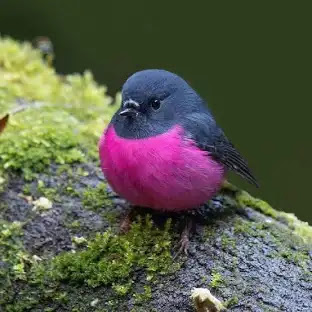
The pink robin (Petroica rodinogaster) is a small passerine bird native to southeastern Australia. Its natural habitats are cool temperate forests of far southeastern Australia.[2] Like many brightly coloured robins of the family Petroicidae, it is sexually dimorphic. Measuring 13.5 cm (5.3 in) in length, the robin has a small, thin, black bill, and dark brown eyes and legs.[3] The male has a distinctive white forehead spot and pink breast, with grey-black upperparts, wings and tail. The belly is white. The female has grey-brown plumage.[4] The position of the pink robin and its Australian relatives on the passerine family tree is unclear; the Petroicidae are not closely related to either the European or American robins, but appear to be an early offshoot of the Passerida group of songbirds.


Taxonomy

Described by Belgian naturalist Auguste Drapiez in 1819, the pink robin is a member of the Australasian robin family Petroicidae.[5][6] Sibley and Ahlquist's DNA-DNA hybridisation studies placed this group in a Corvida parvorder comprising many tropical and Australian passerines, including pardalotes, fairy-wrens, honeyeaters, and crows.[7] However, subsequent molecular research (and current consensus) places the robins as a very early offshoot of the Passerida (or "advanced" songbirds) within the songbird lineage.[8] Testing of the nuclear and mitochondrial DNA of Australian members of the genus Petroica suggests that the pink and rose robins are each other's closest relative within the genus.[9]


The generic name Petroica derives from the Ancient Greek petros 'stone' and oikos 'house'. The specific name rodinogaster derives from the Ancient Greek rhodinos 'pink' and gaster 'belly'.[10]

Male pink robin calling

Duration: 11 seconds.0:11

Description

The pink robin is 13.5 cm (5.5 in) long and displays sexual dimorphism – the males and females have plumage which differ markedly. The male has a dark blackish-grey head, throat, back, wings and tail, a pink breast and belly fading to white on the lower abdomen, and a white forehead. The female is dark grey-brown above, with two buff-coloured wing-bars and pinkish-tinged underparts. The bill and feet are black, and the eyes are dark brown.[11]


"This Content Sponsored by Buymote Shopping app

BuyMote E-Shopping Application is One of the Online Shopping App

Now Available on Play Store & App Store (Buymote E-Shopping)

Click Below Link and Install Application: https://buymote.shop/links/0f5993744a9213079a6b53e8

Sponsor Content: #buymote #buymoteeshopping #buymoteonline #buymoteshopping #buymoteapplication"

Thursday, 12 December 2024

Mandarin ducks (scientifically known as Aix galericulata) are stunning, colorful waterfowl native to East Asia. Known for their striking appearance and cultural symbolism, these ducks are often regarded as a symbol of love, fidelity, and beauty. Below is a complete overview of Mandarin ducks, covering their physical traits, habitat, behavior, and cultural significance:


1. Physical Description

  • Male Mandarin Duck (Drake):
    • The male Mandarin duck is one of the most colorful and visually striking ducks. It has a mix of vibrant orange, blue, green, and purple plumage.
    • The male features a distinctive fan-shaped crest on its head, which is bright orange and extends to the back.
    • Its body is covered in iridescent feathers with bright blue and green hues on the wings, and a white crescent-shaped marking around the eyes.
    • The breast and flanks are a rich chestnut-brown with vertical black stripes, creating a beautiful contrast with the bright colors.
    • The bill is red, and the legs are orange.
  • Female Mandarin Duck (Hen):
    • Female Mandarin ducks are more subdued in color compared to males, with soft brown and gray plumage, making them less conspicuous, especially during the breeding season.
    • The female has a white throat and eye ring around the eyes, which stand out against the darker plumage.
    • Unlike the male, the female does not have the distinctive crest and has a more compact, streamlined body.

2. Size and Weight

  • Length: Mandarin ducks are medium-sized ducks. They typically measure between 41 to 49 cm (16 to 19 inches) in length.
  • Wingspan: They have a wingspan of about 65 to 75 cm (25 to 30 inches).
  • Weight: Males generally weigh around 0.5 to 0.7 kg (1.1 to 1.5 pounds), while females are slightly lighter, weighing around 0.4 to 0.6 kg (0.9 to 1.3 pounds).

3. Habitat and Range

  • Native Range: Mandarin ducks are native to East Asia, specifically China, Japan, Korea, and Russia. They are typically found near wooded lakes, rivers, and wetlands in these regions.
  • Introduced Populations: In recent years, Mandarin ducks have been introduced to parts of Europe and North America. They have established populations in the UK, the Netherlands, and the United States.
  • Preferred Habitat: They thrive in areas with calm waters, such as ponds, streams, and lakes with surrounding woodlands or forests. They are also found in urban parks with suitable water bodies.

4. Behavior and Diet

  • Feeding Habits: Mandarin ducks are omnivorous and feed on a variety of food sources, including aquatic plants, seeds, insects, small fish, and mollusks. They dive into water to forage for food, especially during the winter months when other food sources may be scarce.
  • Social Behavior: While mandarin ducks are generally solitary or found in small groups, during the breeding season, they form monogamous pairs. These pairs are often seen in the wild with the male exhibiting a variety of courtship behaviors to attract the female.
  • Flight: Mandarin ducks are strong fliers but prefer to stay close to water bodies. They are also known for their distinctive flight patterns, which include fast, direct flights with rapid wing beats.

5. Breeding and Nesting

  • Breeding Season: The breeding season for Mandarin ducks usually begins in spring, around March to May.
  • Nesting Sites: Mandarin ducks prefer to build their nests in tree cavities or in hollow logs near water. They often select tall trees for their nesting sites, sometimes up to 10 meters (33 feet) above the ground.
  • Nesting Behavior: The female typically lays 8 to 12 eggs, which are creamy-white in color. She incubates the eggs for about 28 to 30 days. During this time, the male stands guard and keeps an eye out for predators.
  • Ducklings: Once the eggs hatch, the ducklings are able to swim and walk almost immediately. The mother leads them to the water, where they begin foraging for food.

6. Mating and Fidelity

  • Monogamous Pairs: Mandarin ducks are famously monogamous, forming strong pair bonds that last for the duration of the breeding season, and sometimes even for life.
  • Courtship Rituals: The male Mandarin duck performs elaborate courtship displays, including head bobbing, fluffing his crest, and presenting his bright plumage. These displays are intended to attract the female and demonstrate his fitness as a mate.
  • Symbol of Love: Due to their monogamous nature, Mandarin ducks are often regarded as a symbol of fidelity, love, and romance in many cultures, especially in East Asia.

7. Cultural Significance

  • Symbol of Love and Fidelity: In Chinese and Japanese cultures, the Mandarin duck is widely recognized as a symbol of romantic love, loyalty, and fidelity. The belief that these ducks mate for life has made them a popular motif in art, poetry, and literature.
  • In Chinese Art: Mandarin ducks are often depicted in traditional Chinese paintings and are associated with good fortune and harmony in relationships. They are often seen as an auspicious symbol for newlyweds or couples wishing to maintain a strong, loving bond.
  • In Japanese Culture: In Japan, Mandarin ducks are also symbolic of lasting love and are sometimes used in decorative objects like kimonos, ceramics, and paintings.

8. Conservation Status

  • IUCN Status: The Mandarin duck is currently listed as Least Concern by the International Union for Conservation of Nature (IUCN), meaning the species is not facing any immediate threats of extinction.
  • Population Trends: While the Mandarin duck is relatively common in the wild, habitat destruction and pollution in some areas can pose threats to their populations. However, they are adaptable and have successfully established new populations in various parts of the world.
  • Conservation Efforts: Conservation efforts primarily focus on habitat preservation and maintaining clean, accessible water bodies where Mandarin ducks can thrive.

9. Mandarin Ducks in Captivity

  • Mandarin ducks are often kept in zoos and wildlife reserves around the world. They are also popular in private collections and ponds due to their beautiful plumage and captivating behavior.
  • While they can live in captivity, it's important that they are provided with an environment that mimics their natural habitat, including access to water and suitable nesting sites.

Conclusion

Mandarin ducks are among the most striking and fascinating bird species, known for their stunning beauty, symbolism of fidelity, and association with love and romance in Eastern cultures. Native to East Asia but now found in various parts of the world, these ducks are admired not only for their vibrant plumage but also for their behaviors, which highlight loyalty and affection between mated pairs. With their adaptability and resilience, Mandarin ducks continue to thrive in various habitats, making them an iconic symbol in both nature and cultural traditions.


"This Content Sponsored by Buymote Shopping app

BuyMote E-Shopping Application is One of the Online Shopping App

Now Available on Play Store & App Store (Buymote E-Shopping)

Click Below Link and Install Application: https://buymote.shop/links/0f5993744a9213079a6b53e8

Sponsor Content: #buymote #buymoteeshopping #buymoteonline #buymoteshopping #buymoteapplication"

Saturday, 7 December 2024

The Cuban Tody (Todus multicolor) is a small, colorful bird species found in the West Indies, particularly in Cuba, Hispaniola (Haiti and the Dominican Republic), and the surrounding islands. It belongs to the Tody family (Todus), which is a small group of birds known for their vivid plumage and unique behavior. The Cuban Tody is the national bird of Cuba and is widely admired for its striking appearance and distinct call.


Physical Description:

  • Size: The Cuban Tody is a small bird, measuring about 9–11 cm (3.5–4.3 inches) in length.
  • Coloration: It has a very distinctive and bright coloration. The bird features:
    • A green body.
    • A red throat and belly (in males).
    • White markings around the eyes and on the throat.
    • Blue and greenish-blue hues on the wings and tail.
    • Its tail is short and slightly rounded.
  • Beak: The Cuban Tody has a short, stout, and slightly upturned beak, which it uses to catch insects.
  • Sexual Dimorphism: There is some degree of sexual dimorphism. The male has more intense red coloring on its belly and throat, while the female has more muted hues.

Habitat:

  • Range: The Cuban Tody is found primarily in Cuba, but it can also be spotted in nearby islands like Jamaica, Hispaniola, and Grand Cayman.
  • Habitat: It prefers tropical forests and woodland areas, often residing in forested valleys and mountainous regions. It is commonly found at lower elevations but may also inhabit the higher altitudes of Cuba's mountain ranges.

Behavior and Diet:

  • Diet: The Cuban Tody is an insectivore, primarily feeding on small insects, spiders, and arthropods. It catches its prey using its short beak, often hunting on tree trunks and branches.
  • Feeding Technique: It feeds by darting out its beak to catch insects in mid-air or picking them from tree bark, leaves, and other vegetation. It is known for its active foraging style.
  • Foraging: The bird has an energetic, often jerky movement pattern as it moves through trees in search of food.

Reproduction:

  • Nesting: Cuban Todies typically nest in tree holes or cavities in decaying trees. They may also use natural cavities in cliffs or rocks.
  • Eggs: The female lays 2–3 eggs in the nest, which are incubated by both parents.
  • Care: Both male and female share duties in incubation and feeding the chicks once they hatch.

Vocalization:

The Cuban Tody has a very distinctive and melodious call that consists of high-pitched, repetitive notes. The call sounds like a "tody-tody-tody" and is often used by the bird to communicate with its mate or to claim territory.

Conservation Status:

  • IUCN Status: The Cuban Tody is currently classified as "Least Concern" by the International Union for Conservation of Nature (IUCN). The species is relatively stable in its population, thanks to its adaptability to a variety of habitats within Cuba. However, habitat loss and deforestation in some areas can threaten their populations.
  • Threats: While there are no major immediate threats to the Cuban Tody, it could potentially be impacted by environmental changes, including habitat degradation, deforestation, and climate change.

Fun Facts:

  1. National Symbol: The Cuban Tody is not only a symbol of Cuba's rich biodiversity but also its national bird, representing the country's natural heritage.
  2. Family Characteristics: Todies are a unique family of birds, known for their colorful plumage and small size, and the Cuban Tody is one of the most recognizable among them.
  3. Social Behavior: Cuban Todies are generally solitary or found in pairs, and they are very active birds. They can often be seen moving in a jerky manner through vegetation as they forage.

Conclusion:

The Cuban Tody is a remarkable and vibrant bird that holds significant cultural and ecological value in Cuba. Its colorful plumage, distinctive behavior, and unique place in Cuban wildlife make it a symbol of the country's natural beauty and biodiversity. Despite its stable population, continued efforts to preserve its forest habitats are necessary to ensure the bird's long-term survival.


"This Content Sponsored by Buymote Shopping app

BuyMote E-Shopping Application is One of the Online Shopping App

Now Available on Play Store & App Store (Buymote E-Shopping)

Click Below Link and Install Application: https://buymote.shop/links/0f5993744a9213079a6b53e8

Sponsor Content: #buymote #buymoteeshopping #buymoteonline #buymoteshopping #buymoteapplication"